



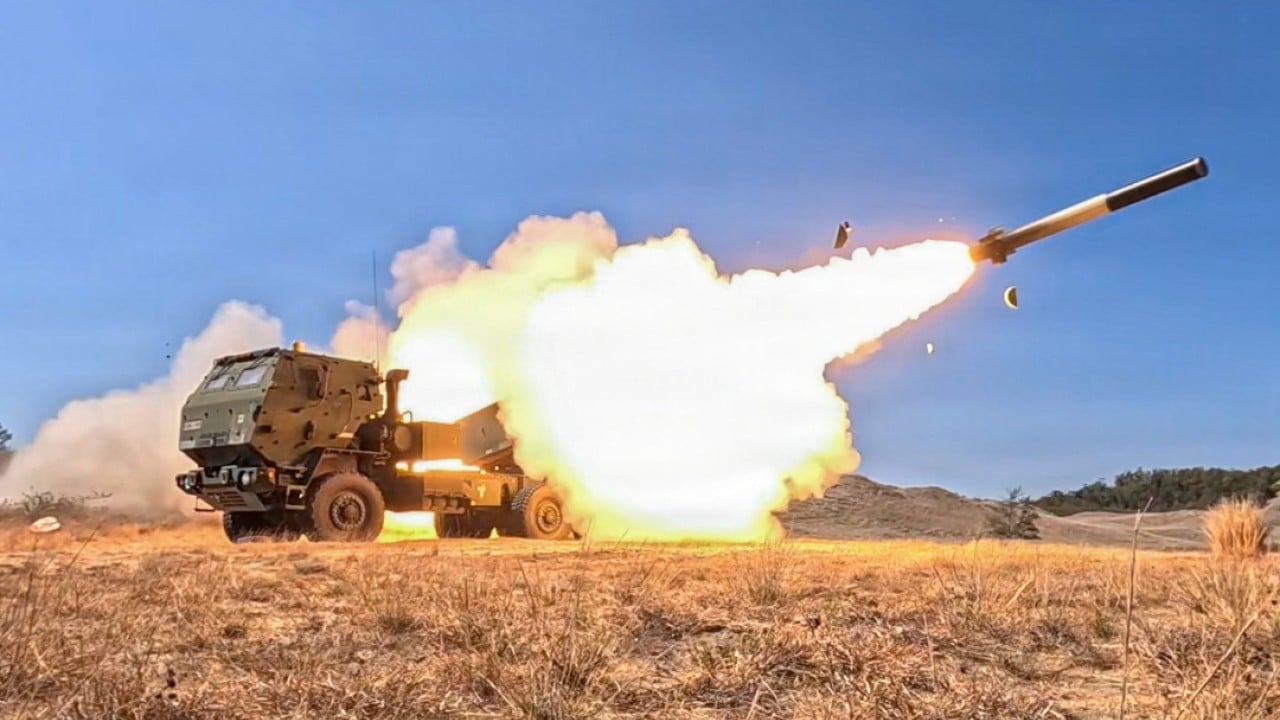
Balikatan 2026 features Japan Type 88 strike and first operational Typhon Tomahawk firing in the Philippines
Less than six minutes after launch, Japan’s Type 88 missile slammed into a decommissioned Philippine warship about 75 km off the coast of Ilocos Norte, a dramatic live-fire moment during Balikatan 2026, the South China Morning Post reported. [1]
The exercise also featured a US-made Tomahawk cruise missile fired from an Army Typhon system on Philippine soil, striking a target some 630 km away. [1] The launch marked the first operational firing of the Typhon system in the Philippines since the launcher was deployed there more than two years earlier. [1]
China swiftly condemned Japan’s test firing as Tokyo’s first overseas “offensive missile” launch in eight decades, and described it as evidence of rising “neo-militarism.” [1]
Chris Gardiner, chief executive of the Institute for Regional Security NGO in Canberra, said the exercise was intended to send an unambiguous message. [1] “The message of the exercise is clear,” Gardiner said. [1] “Not today” — now is not the time to use force against the Philippines or to change the status quo around Taiwan. [1]
Timeline· Quiet
Japan says it seized Chinese vessel
Japan reported seizing a Chinese vessel amid escalating frictions with Beijing, marking an early concrete confrontation that heightened bilateral tensions. The incident fed into a wider pattern of maritime and diplomatic disputes between Japan and China.
U.S. and Japan unveil $36 billion energy projects
The United States and Japan announced about $36 billion in oil, gas and critical-minerals projects intended to diversify supply chains and counter China's regional economic influence. The move signaled deepening economic-security cooperation between the allies.
South Korea, Japan scramble jets after airspace incursion
South Korea and Japan scrambled fighter jets after Chinese and Russian warplanes were spotted entering Seoul's air defense identification zone, a direct military provocation that raised regional alarm. The episode underscored growing risks of miscalculation in contested airspace.
Biden plans Asia visit amid rising tensions
President Biden announced plans to visit Asia at a time of heightened regional tensions, a diplomatic step intended to reassure allies and coordinate responses to Chinese and Russian actions. The planned trip became a focal point for allied engagement on security and economic issues.
Japan warship Taiwan Strait transit reignites tensions
A Japanese warship's passage through the Taiwan Strait prompted renewed criticism from China and added to a series of incidents that strained Beijing-Tokyo relations. The voyage highlighted Japan's more assertive maritime posture and the region's sensitivity over Taiwan-related movements.
Allied drills, missile firings and coast guard actions escalate
In early May, Japan fired anti-ship missiles during Philippine drills (its first such firings there), China condemned Japan's missile activity, and the Balikatan exercises saw U.S., Japanese and Philippine forces flex military cooperation — developments that collectively intensified regional military posturing. These actions illustrated both allied coordination and Beijing's pushback across multiple domains.
Sources (1)
Published May 9, 2026
Synthesized from 1 source