



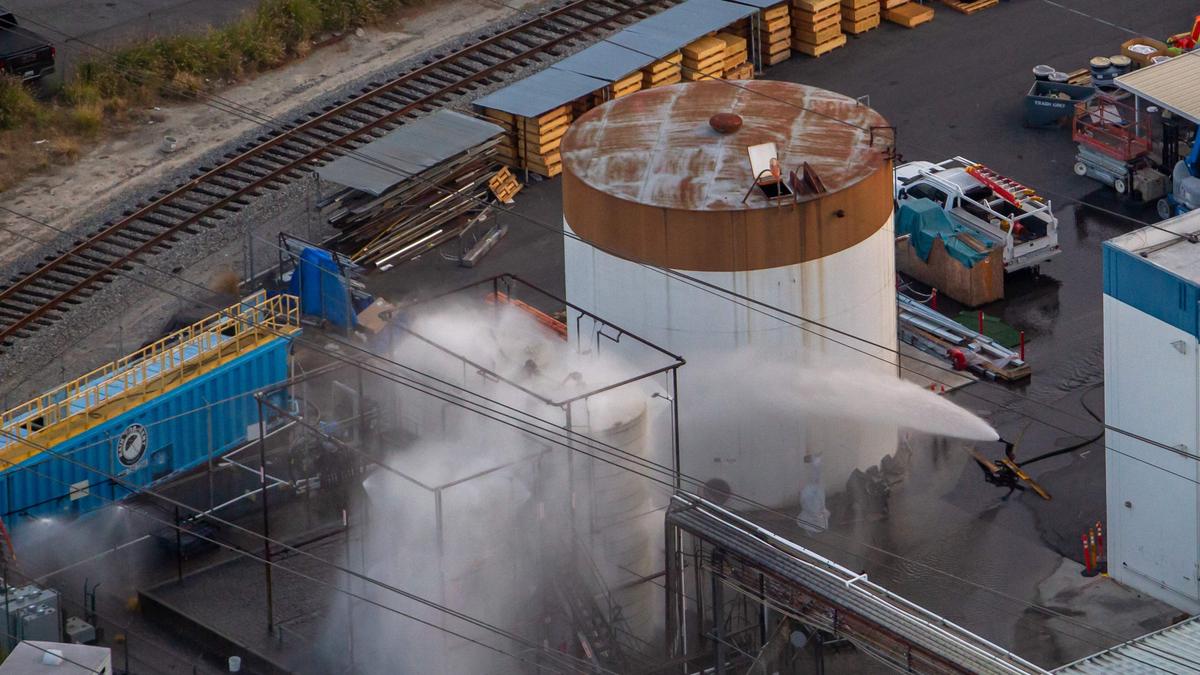
OCFA issues 1,100-foot blast-zone map as crews cool chemical tank
A blast-zone map warned that an explosion could cause severe damage within about 1,100 feet of a chemical tank, with lighter damage extending about the same distance beyond that radius, The Hindu reported. The Orange County Fire Authority released the map as crews continued working to prevent the tank from overheating. [1]
Firefighters kept spraying jets of water to cool the tank and maintained continuous monitoring, OCFA Division Chief Craig Covey said, adding, “We’re continuing to keep them cool and monitor them.” [1]
Covey also said an OCFA emergency team ventured into the area overnight to neutralize the “explosive potential” posed by an additional nearby 15,000-gallon tank. [1]
The developments are the latest in a fast-moving chemical incident that has driven large-scale evacuations. On May 23, 2026, more than 40,000 Californians were evacuated after a chemical tank leak, and officials warned of two dangers: the tank could fail and spill chemicals, or it could enter thermal runaway and explode. [1]
Also on May 23, 2026, Gov. Gavin Newsom declared a state of emergency as fire officials planned for either a rupture and spill or an explosion. OCFA’s blast-zone mapping and overnight operations underscored the continued focus on keeping the tanks stable while crews work in hazardous conditions. [1]
Timeline· Developing
More than 40,000 people have been evacuated in Southern California after a chemical tank in Garden Grove, Orange County cracked, prompting a state of emergency declaration by Governor Gavin Newsom, ongoing firefighting efforts to cool the overheated tank amid a critical explosion risk, and an investigation by the OC District Attorney into the aerospace company responsible for the toxic chemical leak as residents face rising temperatures and uncertainty.
Chemical leak prompts initial mass evacuations
A chemical leak in Southern California led officials to order evacuations affecting roughly 20,000 people as responders warned the storage tank was compromised and could fail. Residents were moved to shelters while authorities assessed the hazard.
- Evacuations expand; streets and shelters emptied
Evacuation orders widened, with reports indicating up to 40,000 people were under orders or advised to leave and shelters filled as neighborhoods emptied amid ongoing fears about the leaking tank. Local officials described large-scale displacement and sheltering operations across Orange County.
Governor declares state of emergency
Gov. Gavin Newsom declared a state of emergency over the chemical incident to mobilize state resources and support local response efforts as the situation escalated. The declaration aimed to speed assistance to affected communities and responders.
- Officials warn tank heating risks explosion
Fire authorities reported rising temperatures in the chemical tank and warned it was at risk of failing or exploding, prompting continued or expanded evacuation orders affecting tens of thousands. Officials characterized the tank's condition as critical and hazardous.
State races to prevent explosion with novel fixes
California authorities pursued urgent and unconventional measures to cool or stabilize the heating tank, describing a race to prevent an explosion while emergency teams assessed technical options. The efforts underscored the complexity and immediacy of the threat.
Local prosecutor opens investigation into company
The Orange County district attorney opened an investigation into the aerospace company responsible for the chemical tank, signaling potential legal and regulatory scrutiny over the cause of the leak and management of the tank. The probe followed mounting public concern and emergency actions.
Related Coverage (2)
Garden Grove chemical tank leak forces 40,000 evacuations as fire chief warns of spill or explosion risk
Officials warned the leaking tank posed two main dangers: it could fail and spill chemicals or enter thermal runaway and explode, potentially affecting nearby fuel and chemical tanks.
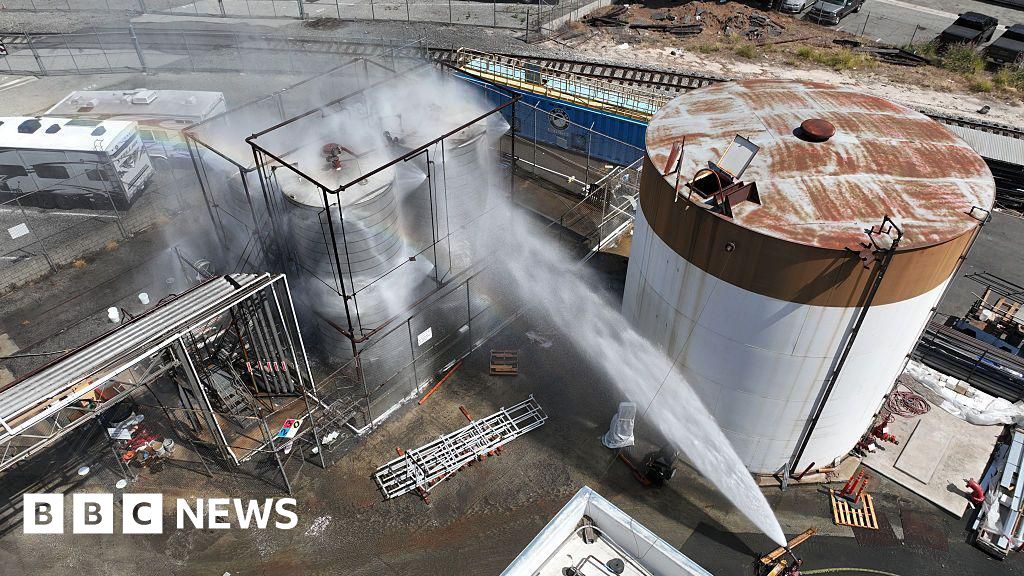
Officials cool damaged chemical tank as planners weigh rupture-or-explosion scenarios
Fire officials planned for two outcomes at a damaged chemical tank: a rupture and spill, or an explosion, Orange County Fire Authority division chief Craig Covey said.
Sources (1)
Published May 23, 2026
Synthesized from 1 source