



South Korea boosts surveillance, shares intel with U.S. and Japan after North Korea missile launch
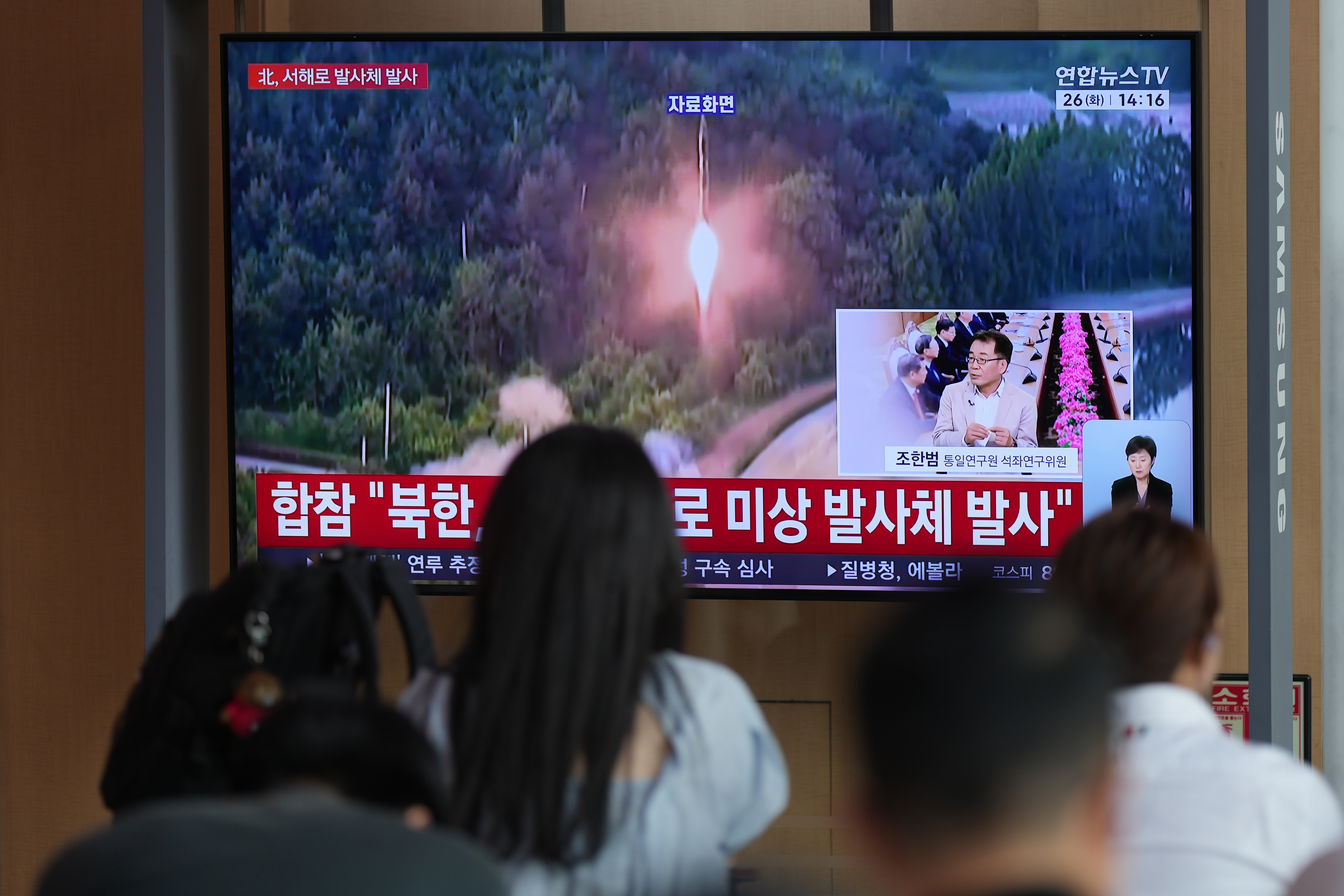
Hours after North Korea fired a ballistic missile on May 26, South Korea raised its guard, widening the net of eyes and sensors watching the North and pushing fresh details to its closest regional partners. Seoul’s Joint Chiefs of Staff said it bolstered its surveillance posture and began closely exchanging related information with the United States and Japan following the launch. [1]
The stepped-up monitoring underscored how quickly a single test can ripple across the region, forcing allied militaries to synchronize assessments and prepare for follow-on activity. While Seoul did not describe the missile’s range or flight path in its immediate response, it framed the sharing of information as a coordinated measure tied directly to the launch. [1]
President Lee Jae Myung used the moment to argue that South Korea’s security posture must be more self-reliant, saying the country should show the “resolve to take responsibility for and protect our own security ourselves,” and that doing so would also strengthen the alliance with Washington. [2]
Lee also called for accelerating efforts to modernize the military, emphasizing artificial intelligence and drone capabilities and raising the possibility of acquiring a nuclear-powered submarine. [2]
The moves come amid a long stretch of rising tensions that included North Korean artillery fire near the border on Feb. 23, 2026, and, more recently, a failed spy-satellite launch on May 31, 2026—events that have kept Seoul and its allies bracing for further provocations. [1][2]
How it's being framed
Seoul says it increased surveillance and shared information with the U.S. and Japan after the May 26 launch.
South Korea’s military response centers on immediate monitoring and allied coordination to track and assess the launch.
Lee links self-reliant defense to strengthening the U.S. alliance.
Lee urges stronger efforts to advance the military and highlights AI and drones.
Lee raises the potential acquisition of a nuclear-powered submarine.
“resolve to take responsibility for and protect our own security ourselves”
— New York Post
Timeline· Live
Since North Korea's escalating military provocations beginning with artillery fire near the border on February 23, 2026, including missile launches, a military pact with Russia, drone incursions, aggressive air maneuvers, and the unveiling of new nuclear warheads capable of reaching the US, tensions have sharply increased, culminating in Mike Pence's visit to the DMZ where he warned North Korea of a firm military response, followed by North Korea firing missiles as the South Korean leader sought to acquire nuclear submarines, and most recently North Korea intensified its show of force by launching ballistic missiles over the sea and firing a ballistic missile into the Yellow Sea, further escalating the highly volatile and dangerous regional security situation.
Kim Jong Un Oversees New Missile Tests and Production
In late February Kim Jong Un personally inspected missile production and oversaw test launches, including the debut of North Korea's most powerful ICBM and new air‑defence systems, signaling an intensified weapons development push.
North Korea Test‑Fires Sea‑to‑Surface Cruise Missiles
On March 2 North Korea conducted test launches of sea‑to‑surface cruise missiles, part of a series of recent weapons tests aimed at expanding its maritime strike capabilities.
Missile Launch Over Japan and Guam‑Range Claim
In early April North Korea launched a missile that flew over Japanese territory and confirmed that the tested system could reach Guam, underscoring expanded range and the strategic implications for regional actors.
North Korea and Russia Formalize Long‑Term Military Cooperation
Late April saw Moscow and Pyongyang announce a long‑term military cooperation agreement and related deployments, marking a formal deepening of military ties between the two countries.
Kim Jong Un Outlines Extreme Battlefield Doctrine
North Korea publicly revealed an aggressive battlefield doctrine in late April, articulating operational concepts that complemented recent weapons tests and the growing military partnership with Russia.
North Korean Personnel Attend Russian Victory Parade
In May North Korean personnel, and Kim‑aligned delegations, participated in Russia's WWII Victory Day events in Kursk and Moscow, reinforcing the public and personnel-level ties established under the new cooperation framework.
North Korea Amends Constitution to Mandate Nuclear Response
On May 10 North Korea updated its constitution to require an automatic nuclear strike if Kim Jong Un were assassinated, representing a formal hardening of its nuclear policy amid heightened military cooperation with Russia.
Sources (2)
Published May 26, 2026
Synthesized from 2 sources